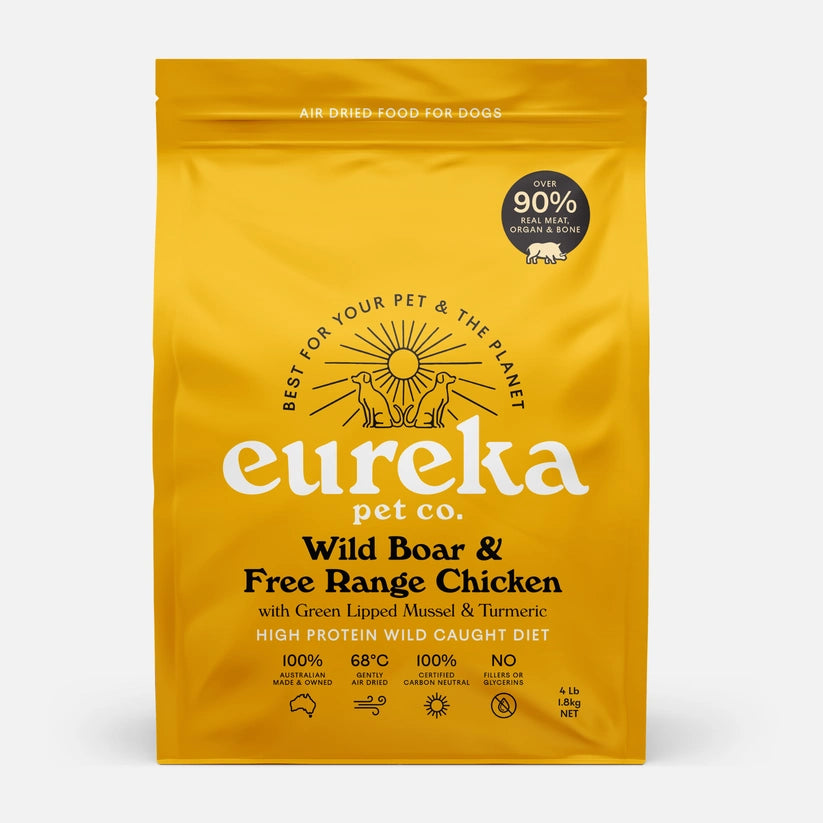
Pawdit presents manufacturer-declared facts and attributes every note to its published source. We do not rate, grade or rank products. This assessment is generated by an algorithmic methodology based on published sources. It is not a guarantee of product quality or safety. Always consult your veterinarian.
2 sources, cross-checked · prices re-checked 10 days ago
Ingredients
22 listed by weight, heaviest first · tap any ingredient for its research notes
13 beneficial2 contextual6 standard ingredientsWhat do these mean? ▾
Beneficial. Linked to benefits in published research. Tiers show evidence strength.
Restricted or banned. Restricted or banned by a regulator in at least one country.
Under research review. Being studied or re-evaluated by researchers or regulators.
Contextual. Not flagged, but there is a note worth reading.
Standard. Everyday components like vitamins and minerals.
Not yet classified. Not in our dictionary yet. Always still listed.
Counts include what's inside compound entries like vitamin premixes, so they can add up to more than the label's ingredient count.
1Wild Boar MeatNamed single-species whole meat▾
● Beneficial (well-established)Whole meat from a named animal species. Both the species and the form are identified, which supports traceability and allergy checking. Published nutrition references associate named whole meats with high protein quality.Sources: AAFCO 2024 · NRC 2006 · Amino acid bioavailability studies
2Wild Boar OrgansNamed single-species whole meat▾
● Beneficial (well-established)Whole meat from a named animal species. Both the species and the form are identified, which supports traceability and allergy checking. Published nutrition references associate named whole meats with high protein quality.Sources: AAFCO 2024 · NRC 2006 · Amino acid bioavailability studies
3
Show all 22 ingredients ▾
9Free Range EggsWhole eggs / dried egg product▾
● Beneficial (well-established)Egg protein has the highest biological value of any common protein source, providing a complete amino acid profile.Sources: NRC 2006 · Protein biological value studies
10Chia Seed▾
● Beneficial (emerging)A plant-based source of omega-3 (ALA), soluble fibre, and protein. Rich in calcium, magnesium, and phosphorus. Some studies have explored benefits for skin/coat health and digestive support in dogs. Like flaxseed, ALA conversion to EPA/DHA is limited in dogs and negligible in cats.Sources: Journal of Animal Physiology and Animal Nutrition 2022 · Nutritional composition data
11
Guaranteed analysis
as fed · compared to AAFCO dog growth & reproduction minimums
✓Formulated to meet AAFCO nutrient profiles (All Life Stages)"Formulated to be complete and balanced to AAFCO standards." (brand statement)
Protein37%AAFCO min 22.5% DM
Fat25%AAFCO min 8.5% DM
Fibre2%no AAFCO reference
Moisture14%no AAFCO reference
5,119 kcal/kg≈ 2,142 kJ / 100g energy densityBrand states 511.9 kcal/100g
Values as declared by the manufacturer (as fed). AAFCO minimums are published on a dry-matter basis and converted using the declared moisture before comparison; the comparison is shown for context only. Consult your vet for diet decisions.
Brand transparency
Eureka Pet Co · what the manufacturer discloses, not a rating
Recall historyon recordNo recalls found (searched Jul 2026).
AS5812 accreditationnot confirmed
PFIAA membershipnot confirmed
Quality certificationsnone listed
Parent companynot disclosed
A factual disclosure checklist from public records and the brand's own statements. Items we haven't verified show as not confirmed: a data gap, not a judgment. Are you Eureka Pet Co? Claim your brand to confirm or correct this record, free.
Where to buy
confirm prices and explore sizes on the retailer's site
● Standard ingredientGround or crushed bone, used in some raw diets as a source of calcium and phosphorus.Sources: Nutritional composition data
4Free Range Chicken Meat, OrgansNamed single-species whole meat▾
● Beneficial (well-established)Whole meat from a named animal species. Both the species and the form are identified, which supports traceability and allergy checking. Published nutrition references associate named whole meats with high protein quality.Sources: AAFCO 2024 · NRC 2006 · Amino acid bioavailability studies
5Bone
6Apple FibreApple▾
● Standard ingredientA whole fruit providing fibre and vitamins.Sources: Nutritional composition data
7Salmon OilEPA + DHA (marine-source omega-3)▾
● Beneficial (well-established)Marine-source omega-3 fatty acids associated with anti-inflammatory, skin/coat health, joint support, cognitive function, and cardiac and renal support in multiple peer-reviewed studies.Sources: Bauer 2011 JAVMA · NRC 2006 · Multiple RCTs in dogs for skin/joint conditions
8Broccoli▾
● Standard ingredientA cruciferous vegetable providing vitamins and fibre.Sources: Nutritional composition data
Green Lipped Mussel
Green-lipped mussel (Perna canaliculus)
▾
● Beneficial (supported)Contains a unique omega-3 fatty acid (ETA) and has been associated with anti-inflammatory and joint support benefits in some studies in dogs. Relevant for the AU/NZ market.Sources: Servet et al. 2006 · Bierer & Bui 2002Position on the ingredient list suggests a moderate to small inclusion level.
12Blueberries▾
● Beneficial (emerging)A whole-food source of anthocyanins, associated with antioxidant properties in published research.Sources: Prior et al. 2008Position on the ingredient list suggests a moderate to small inclusion level.
13Organic KelpKelp / seaweed meal▾
● Beneficial (supported)A natural source of iodine and trace minerals. Some studies have explored dental health benefits. Note: excessive iodine from kelp could affect thyroid function in cats with hyperthyroidism.Sources: NRC 2006Position on the ingredient list suggests a moderate to small inclusion level.
14Sea SaltSalt▾
● Contextual noteAn essential mineral present in all pet food. Flag only when appearing high on the ingredient list.Sources: NRC 2006
15FlaxseedFlaxseed / flaxseed oil▾
● Beneficial (supported)A plant-based source of omega-3 (ALA), fibre, and lignans. Note: dogs have limited ability to convert plant ALA to the more bioactive EPA/DHA found in marine sources.Sources: Bauer 2011Position on the ingredient list suggests a small inclusion level.
16Vitamins & MineralsMinerals (generic)▾
● Standard ingredientA generic term for a mineral premix. Where the label lists the specific mineral compounds in brackets, each is shown and classified below; otherwise the individual minerals are not disclosed. European-style labels declare added trace minerals as numbered additives with doses (e.g. "E4 (copper): 10 mg").Sources: AAFCO ingredient definitions
17Chicory Root (Inulin)1 components▾
● Beneficial (supported)A prebiotic fibre associated with gut microbiome support in published studies. Promotes beneficial bacteria growth.Sources: Swanson et al. 2002Position on the ingredient list suggests a small inclusion level.
The label lists this premix's contents, each piece classified on its own:
18Citric Acid▾
● Standard ingredientA naturally occurring organic acid used as a preservative and antioxidant.Sources: AAFCO ingredient definitions
19Rosemary ExtractRosemary / rosemary extract▾
● Contextual noteGenerally regarded as a positive natural preservative alternative to synthetic options. Some veterinary sources suggest rosemary may lower seizure thresholds in dogs with epilepsy.Sources: Goncalves et al. 2019
20PostbioticsPostbiotics / fermentation products▾
● Beneficial (emerging)Fermentation products (e.g., dried Bacillus subtilis fermentation product) are an emerging category of gut health ingredients. Unlike live probiotics, postbiotics survive processing.Sources: Swanson et al. 2002 · ISAPP consensus 2021Position on the ingredient list suggests a small inclusion level.
21Lecithin▾
● Standard ingredientA phospholipid mixture used as a natural emulsifier (E322) to blend fats and water and improve texture; also a source of choline and phosphatidylcholine. Commonly sourced from soy or sunflower. Soy-derived lecithin is relevant for pets with soy sensitivity; sunflower lecithin is a common soy-free alternative. Generally recognised as safe. Marketed benefits for skin, coat, and cognition are largely emerging.Sources: FDA GRAS status · AAFCO ingredient definitions · Nutritional composition data
22TurmericTurmeric / curcumin▾
● Beneficial (emerging)Curcumin has well-documented anti-inflammatory properties in laboratory studies, but its bioavailability in standard oral forms is poor without specific enhancement (piperine, lipid carrier, or phytosomal formulation). In several randomised controlled trials in dogs and cats with osteoarthritis, diets and supplements containing bioavailability-enhanced curcumin (for example phosphatidylcholine/phytosome complexes), usually combined with other ingredients such as omega-3 fatty acids, hydrolysed collagen or green-lipped mussel, were associated with owner- and veterinarian-reported improvements in pain and mobility (e.g. Comblain et al., 2017); objective gait measures were often unchanged, and these effects have not been demonstrated for the small amounts of plain turmeric found in most foods.Sources: Colitti et al. 2012 · Comblain et al., BMC Veterinary Research 2017, DOI 10.1186/s12917-017-1317-8 · Feline osteoarthritis diet with EPA/DHA, turmeric extract and hydrolysed collagen, Animals 2024;14(22):3298 · Moreau et al., Veterinary Record 2003;152(11):323 (counter-evidence: curcumin nutraceutical did not improve objective gait vs NSAIDs) · Pye et al., Journal of Small Animal Practice 2024 (review)Position on the ingredient list suggests a small inclusion level.