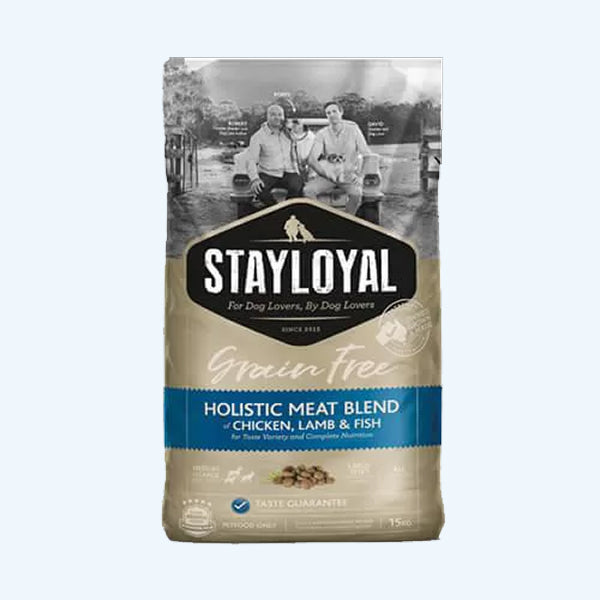
Pawdit presents manufacturer-declared facts and attributes every note to its published source. We do not rate, grade or rank products. This assessment is generated by an algorithmic methodology based on published sources. It is not a guarantee of product quality or safety. Always consult your veterinarian.
22 components (the label lists 21 ingredients) · tap any for its research notes
What do these mean? ▾
Beneficial. Linked to benefits in published research. Tiers show evidence strength.
Restricted or banned. Restricted or banned by a regulator in at least one country.
Under research review. Being studied or re-evaluated by researchers or regulators.
Contextual. Not flagged, but there is a note worth reading.
Standard. Everyday components like vitamins and minerals.
Not yet classified. Not in our dictionary yet. Always still listed.
Counts include what's inside compound entries like vitamin premixes, so they can add up to more than the label's ingredient count.
1Chicken MealNamed species meat meal▾
● Beneficial (well-established)Rendered meal from a named animal species: a concentrated protein source with water and fat removed. The species is identified, which supports traceability and allergy checking.Sources: AAFCO ingredient definitions · Veterinary nutrition references
2Lamb MealNamed species meat meal▾
● Beneficial (well-established)Rendered meal from a named animal species: a concentrated protein source with water and fat removed. The species is identified, which supports traceability and allergy checking.Sources: AAFCO ingredient definitions · Veterinary nutrition references
3Chicken Fat (preserved with mixed Tocopherols)1 components▾
● Standard ingredientA named animal fat source providing energy and essential fatty acids.Sources: AAFCO ingredient definitions
The label breaks this entry into components, each classified on its own:
4PotatoPotato / sweet potato▾
● Contextual noteDigestible carbohydrate sources. Not harmful in themselves. Often used in grain-free formulations.Sources: NRC 2006
5TapiocaTapioca / tapioca starch▾
● Contextual noteA carbohydrate source that provides energy but limited micronutrients.Sources: NRC 2006
6PeasPeas / lentils / chickpeas▾
● Contextual noteWhole legumes provide protein, fibre, and micronutrients. The FDA investigated (2018-2022) a potential association with dilated cardiomyopathy (DCM) in dogs when legumes are used as a primary ingredient, did not establish a causal link, and has paused public updates pending new science.Sources: FDA DCM Investigation 2018-2022 · Freeman et al. 2018 JAVMA
7BeansPeas / lentils / chickpeas▾
● Contextual noteWhole legumes provide protein, fibre, and micronutrients. The FDA investigated (2018-2022) a potential association with dilated cardiomyopathy (DCM) in dogs when legumes are used as a primary ingredient, did not establish a causal link, and has paused public updates pending new science.Sources: FDA DCM Investigation 2018-2022 · Freeman et al. 2018 JAVMA
● Contextual noteA generic flavouring declaration. The label does not disclose whether the flavouring is natural or artificial, or what it is derived from.Sources: EU Regulation 767/2009
Show all 22 components ▾
9Sugar Beet PulpBeet pulp▾
● Beneficial (supported)A well-studied moderately fermentable fibre source associated with stool quality benefits in dogs.Sources: NRC 2006 · Fahey et al. 1990
10Fish MealUnnamed fish / fish derivatives▾
● Contextual noteA fish ingredient where the species is not named (for example 'fish', 'ocean fish' or 'fish derivatives'). Naming the species would give fuller disclosure of the source.Sources: Label transparency
11
Guaranteed analysis
as declared by the manufacturer
✓Labelled complete and balanced (no recognised standard cited)
Protein32%moisture not declared, no AAFCO comparison
Fat18%moisture not declared, no AAFCO comparison
Fibre3%no AAFCO reference
3,500 kcal/kg≈ 1,464 kJ / 100g energy densityBrand states 3,500 kcal/kg
Also declared on the label
Omega-3 (total)0.5%guaranteed min
Moisture is not declared on the label, so no dry-matter comparison against AAFCO minimums is shown.
Values as declared by the manufacturer (as fed). AAFCO minimums are published on a dry-matter basis and converted using the declared moisture before comparison; the comparison is shown for context only. Consult your vet for diet decisions.
Brand transparency
Stay Loyal · what the manufacturer discloses, not a rating
Recall historyno recall, reports loggedNo formal recall found, but APOG's consumer issue log records mouldy bags of Stay Loyal Chicken, Lamb and Fish biscuits (best-by May 2025 batch) reported July-December 2024, which Stay Loyal attributed to heat-affected storage of a batch it said was removed (searched Jul 2026).
AS5812 accreditationAustralia's voluntary pet food manufacturing standardnot confirmed
PFIAA membershipPet Food Industry Association of Australianot confirmed
Quality certificationsnone listed
Parent companynot disclosed
A factual disclosure checklist from public records and the brand's own statements. Items we haven't verified show as not confirmed: a data gap, not a judgment. Are you Stay Loyal? Claim your brand to confirm or correct this record.
Customer reviews
5
121 reviews · aggregated from retailer listings across multiple sources
Where to buy
confirm prices and explore sizes on the retailer's site
Marine Fish Oil (preserved with mixed Tocopherols)
1 components
▾
● Beneficial (well-established)Marine-source omega-3 fatty acids associated with anti-inflammatory, skin/coat health, joint support, cognitive function, and cardiac and renal support in multiple peer-reviewed studies.Sources: Bauer 2011 JAVMA · NRC 2006 · Multiple RCTs in dogs for skin/joint conditionsPosition on the ingredient list suggests a moderate to small inclusion level.
The label breaks this entry into components, each classified on its own:
12FruitFruits (generic/unspecified)▾
● Contextual noteA generic declaration for fruit ingredients, common on European-style labels. Where the label names the fruits in brackets, each is shown and classified below. Unnamed fruits limit traceability.Sources: EU Regulation 767/2009
● Contextual noteA generic term for vegetable ingredients. Where the label names the vegetables in brackets, each is shown and classified below; 'including' wording means others may be present without being listed. Unnamed vegetables limit traceability and allergen assessment.Sources: AAFCO ingredient definitions
The label breaks this entry into components, each classified on its own:
14RosemaryRosemary / rosemary extract▾
● Contextual noteGenerally regarded as a positive natural preservative alternative to synthetic options. No published study links food-grade rosemary extract to seizures in dogs; the reported concern involves concentrated rosemary essential oil, a different preparation.Sources: Goncalves et al. 2019 · Essential oils and seizure systematic review 2019
15Inulin▾
● Beneficial (supported)A prebiotic fibre associated with promoting beneficial gut bacteria (bifidobacteria).Sources: Swanson et al. 2002Position on the ingredient list suggests a moderate to small inclusion level.
16MethionineDL-methionine▾
● Contextual noteAn essential amino acid commonly added to pet food. Also functions as a urinary acidifier (lowers urine pH). Veterinary sources note it should be used with caution in pets with kidney disease, pancreatic disease, or liver insufficiency. Not recommended for kittens.Sources: VCA Animal Hospitals · PetMD veterinary reference · NRC 2006
17Potassium ChloridePotassium salts▾
● Standard ingredientA standard added potassium (mineral) supplement.Sources: NRC 2006
18Vitamin Supplements (A ,D, E, K, B1, B2, B3, B5, B6, B12, Biotin). Trace Mineral Supplements (Zinc, Iron, Copper, Manganese, Iodine, Selenium)7 components▾
The label breaks this entry into components, each classified on its own:
19Natural Antioxidants (Mixed Tocopherols and Rosemary Extract) Vitamin E2 components▾
● Standard ingredientNatural preservation agents such as tocopherols or rosemary extract. Where the label names the agents in brackets, each is shown and classified below; 'including' wording means others may be present without being listed.Sources: AAFCO ingredient definitions
The label breaks this entry into components, each classified on its own:
20Vitamin CVitamin C as preservative▾
● Beneficial (emerging)This product uses vitamin C (ascorbic acid or ascorbyl palmitate) as part of its preservation system.Sources: NRC 2006Position on the ingredient list suggests a small inclusion level.
21YuccaYucca schidigera extract▾
● Beneficial (supported)Associated with faecal odour reduction in published studies. Some research has explored anti-inflammatory properties.Sources: Lowe & Kershaw 1997Position on the ingredient list suggests a small inclusion level.
22TaurineTaurine (supplemental)▾
● Beneficial (well-established)Taurine supplementation is increasingly common in dog food, particularly for breeds associated with DCM susceptibility.Sources: Pion et al. 1987 · NRC 2006 · Freeman et al. 2018Position on the ingredient list suggests a small inclusion level.