Pawdit presents manufacturer-declared facts and attributes every note to its published source. We do not rate, grade or rank products. This assessment is generated by an algorithmic methodology based on published sources. It is not a guarantee of product quality or safety. Always consult your veterinarian.
21 components (the label lists 19 ingredients) · tap any for its research notes
What do these mean? ▾
Beneficial. Linked to benefits in published research. Tiers show evidence strength.
Restricted or banned. Restricted or banned by a regulator in at least one country.
Under research review. Being studied or re-evaluated by researchers or regulators.
Contextual. Not flagged, but there is a note worth reading.
Standard. Everyday components like vitamins and minerals.
Not yet classified. Not in our dictionary yet. Always still listed.
Counts include what's inside compound entries like vitamin premixes, so they can add up to more than the label's ingredient count.
1MeatUnnamed meat sources▾
● Under research reviewProtein source without species identification. Terms like meat, meat meal, animal by-products or co-products, meat and bone meal, or meat and animal derivatives do not identify the animal species, which limits traceability and makes allergen avoidance difficult.Sources: AAFCO 2024 Official Publication · EU Regulation 767/2009
2meat meals (lamb, poultry and fish and/or beef)4 components▾
● Contextual noteA meat ingredient where the animal species is named but disclosure is partial: by-products from a named species (e.g. chicken by-product meal; also labelled "co-products", the industry's newer term), or a generic meat term with the species named in brackets (e.g. meat meal (beef and/or lamb)). An "and/or" list means the exact mix may vary between batches; where a percentage is shown (e.g. "chicken 27%"), only that minimum is guaranteed to come from that species. Named species are checked against your pet's allergy profile. By-product and co-product terms do not specify which parts are used. More transparent than fully unnamed meat terms; named whole meats, meals, and organ meats provide the strongest traceability.
Show all 21 components ▾
9beet pulp▾
● Beneficial (supported)A well-studied moderately fermentable fibre source associated with stool quality benefits in dogs.Sources: NRC 2006 · Fahey et al. 1990
10chicken gravyNamed single-species whole meat▾
● Beneficial (well-established)Whole meat from a named animal species. Both the species and the form are identified, which supports traceability and allergy checking. Published nutrition references associate named whole meats with high protein quality.Sources: AAFCO 2024 · NRC 2006 · Amino acid bioavailability studies
11
Guaranteed analysis
as declared by the manufacturer
✓Labelled complete and balanced (no recognised standard cited)
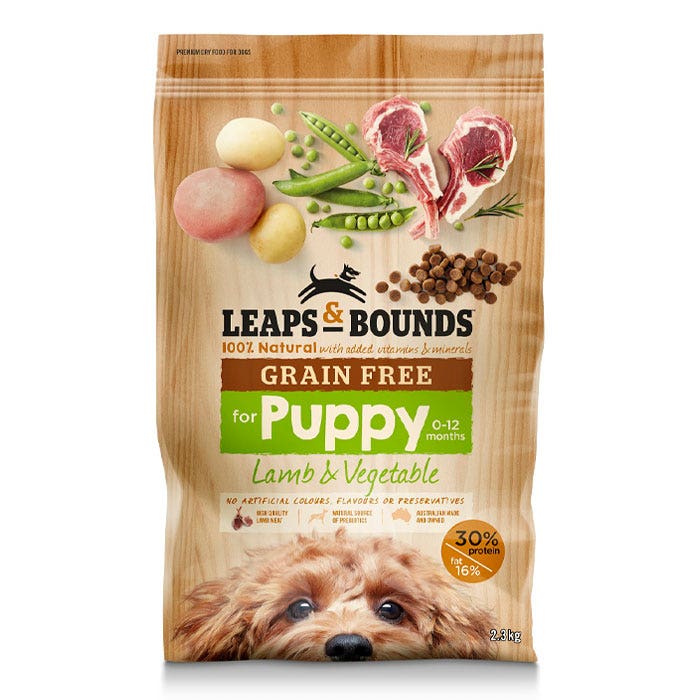
Protein30%moisture not declared, no AAFCO comparison
Fat16%moisture not declared, no AAFCO comparison
Fibre5%no AAFCO reference
3,600 kcal/kg≈ 1,506 kJ / 100g energy densityBrand states 360 kcal/100g
Moisture is not declared on the label, so no dry-matter comparison against AAFCO minimums is shown.
Values as declared by the manufacturer (as fed). AAFCO minimums are published on a dry-matter basis and converted using the declared moisture before comparison; the comparison is shown for context only. Consult your vet for diet decisions.
Brand transparency
Leaps & Bounds · what the manufacturer discloses, not a rating
Part of Greencross (Petbarn private label) · 2 brands on Pawdit
A factual disclosure checklist from public records and the brand's own statements. Items we haven't verified show as not confirmed: a data gap, not a judgment. Are you Leaps & Bounds? Claim your brand to confirm or correct this record.
Customer reviews
4.9
61 reviews · aggregated from retailer listings across multiple sources
What owners mention most: Customers praise the taste and quality of the food.
Where to buy
confirm prices and explore sizes on the retailer's site
Sources: AAFCO ingredient definitions · EU Regulation 767/2009
The label names these possible species — shown for identification and allergy checking:
3vegetableVegetables (generic)▾
● Contextual noteA generic term for vegetable ingredients. Where the label names the vegetables in brackets, each is shown and classified below; 'including' wording means others may be present without being listed. Unnamed vegetables limit traceability and allergen assessment.Sources: AAFCO ingredient definitions
● Contextual noteA generic term for vegetable ingredients. Where the label names the vegetables in brackets, each is shown and classified below; 'including' wording means others may be present without being listed. Unnamed vegetables limit traceability and allergen assessment.Sources: AAFCO ingredient definitions
The label breaks this entry into components, each classified on its own:
5tapiocaTapioca / tapioca starch▾
● Contextual noteA carbohydrate source that provides energy but limited micronutrients.Sources: NRC 2006
6potato starchesStarch (generic/unspecified)▾
● Contextual noteA concentrated starch used as a digestible carbohydrate source and binder. The source plant is often not specified, which limits traceability; named starches (e.g. potato starch) are shown under their own entries where recognised.Sources: AAFCO ingredient definitions · EU Regulation 767/2009
7chicken fat stabilised with natural mixed tocopherols (source of vitamin E)1 components▾
● Beneficial (emerging)This product uses mixed tocopherols (natural vitamin E) as a preservative, which is an alternative to synthetic preservation systems.Sources: NRC 2006
The label breaks this entry into components, each classified on its own:
8chicken proteinNamed single-species whole meat▾
● Beneficial (well-established)Whole meat from a named animal species. Both the species and the form are identified, which supports traceability and allergy checking. Published nutrition references associate named whole meats with high protein quality.Sources: AAFCO 2024 · NRC 2006 · Amino acid bioavailability studies
whole oil seeds
Seeds (generic/unspecified)
▾
● Contextual noteA generic seed declaration. Where the label names the seeds in brackets, each is shown and classified below. Unnamed seeds limit traceability and allergen assessment.Sources: AAFCO ingredient definitions
12salt▾
● Contextual noteAn essential mineral present in all pet food. Flag only when appearing high on the ingredient list.Sources: NRC 2006
13potassium chloride▾
● Standard ingredientA standard added potassium (mineral) supplement.
14kelp mealKelp / seaweed meal▾
● Beneficial (supported)A natural source of iodine and trace minerals. Some studies have explored dental health benefits. Note: excessive iodine from kelp could affect thyroid function in cats with hyperthyroidism.Sources: NRC 2006Position on the ingredient list suggests a small inclusion level.
● Beneficial (supported)A prebiotic fibre associated with gut microbiome support in published studies. Promotes beneficial bacteria growth.Sources: Swanson et al. 2002Position on the ingredient list suggests a small inclusion level.
16choline chloride▾
● Standard ingredientCholine chloride: a standard added nutrient for normal cell and nerve function.
17yuccaYucca schidigera extract▾
● Beneficial (supported)Associated with faecal odour reduction in published studies. Some research has explored anti-inflammatory properties.Sources: Lowe & Kershaw 1997Position on the ingredient list suggests a small inclusion level.
18essential vitamins and mineralsMinerals (generic)▾
● Standard ingredientA generic term for a mineral premix. Where the label lists the specific mineral compounds in brackets, each is shown and classified below; otherwise the individual minerals are not disclosed. European-style labels declare added trace minerals as numbered additives with doses (e.g. "E4 (copper): 10 mg").Sources: AAFCO ingredient definitions
19DHA GoldAlgal oil (DHA source)▾
● Beneficial (emerging)A plant-based source of DHA omega-3 derived from microalgae (often Schizochytrium sp.). Provides DHA without fish-derived ingredients.Sources: Algal oil DHA bioavailability studiesPosition on the ingredient list suggests a small inclusion level.
20whole canolaCanola (seed/meal)▾
● Contextual noteCanola seed or the meal left after oil extraction, used as a plant protein and fibre source; distinct from canola oil.Sources: Nutritional composition data
● Standard ingredientNatural preservation agents such as tocopherols or rosemary extract. Where the label names the agents in brackets, each is shown and classified below; 'including' wording means others may be present without being listed.Sources: AAFCO ingredient definitions